
WELCOME BONUS 200%
UP TO €1500 + 200
FREE SPINS
UP TO €1500 + 200
FREE SPINS
Home → Games
Casino games at Weiss-Casino
Baccarat in three steps: bet, reveal, compare
The Baccarat Banker bet, with a 5% commission on winnings, offers an RTP of 98.94%, resulting in a house edge of 1.06%. This bet is considered the strongest option within the game due to its favorable return-to-player rate. The effective payout for a winning Banker bet is 0.95:1 after the commission is applied.
In contrast, the Baccarat Tie bet, when paying 9:1, has a significantly lower RTP of 95.16% and a house edge of 4.84%. While this payout is higher than standard, it remains substantially less advantageous than betting on the Banker or Player. This bet covers the outcome where both hands have the same value.
The Baccarat Tie bet, when paying 8:1, presents an even less favorable RTP of 85.64%, leading to a house edge of 14.36%. This represents the weakest main bet in Baccarat, with a push occurring if the Banker or Player bets tie. The Standard Deviation for this bet is 2.64.
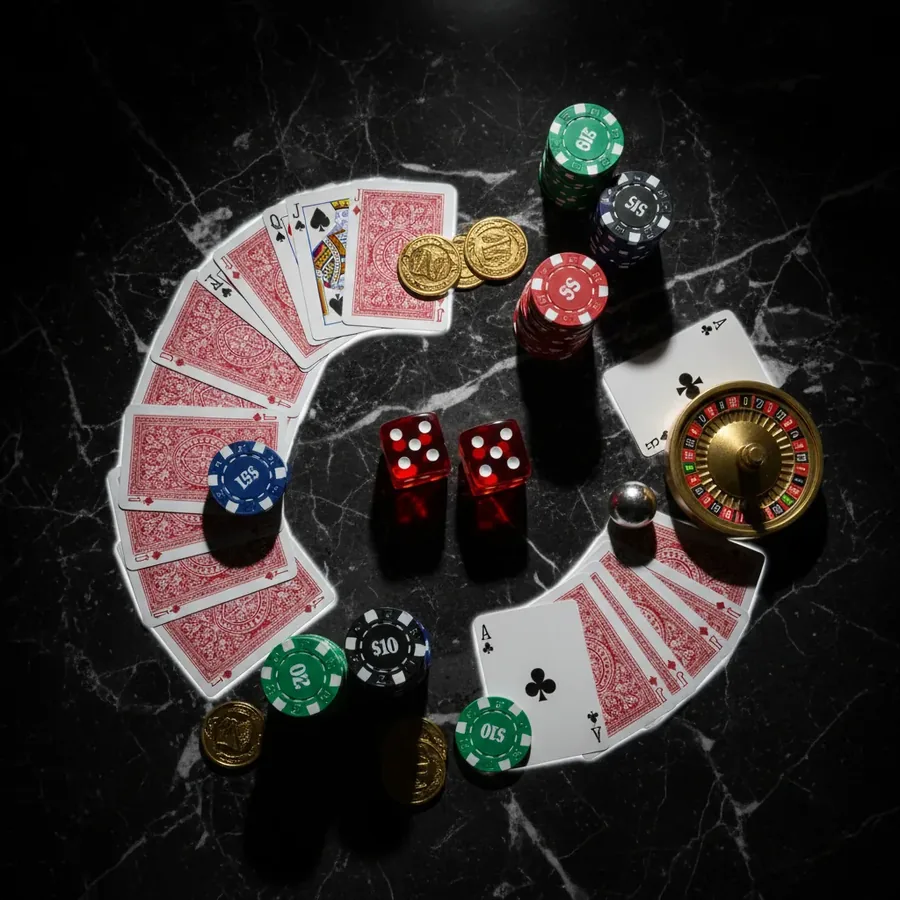
Blackjack flow: cards, decision, payout 3:2
Blackjack, played with 6 decks under S17 rules with DAS and DOA, features a 3:2 payout and an RTP of 99.54%, yielding a house edge of 0.46%. Key rules include the dealer standing on soft 17, allowing doubles on any two cards, and permitting doubles after splits. A strict adherence to basic strategy is mandatory for these figures.
Specific rule modifications can alter the house edge in Blackjack; for instance, the Dealer Hits Soft 17 (H17) rule increases the RTP by 0.22 percentage points. Conversely, Resplitting Aces (RSA) improves the RTP by 0.08 percentage points, and Doubling After Split (DAS) offers an approximate 0.14 percentage point improvement.
The payout for a natural Blackjack, achieved with a 3:2 ratio, provides a standard win of 1:1. Insurance, a side bet offered when the dealer shows an Ace, has an RTP of 92.53% and a house edge of 7.47%, with basic strategy always advising against it unless card counting is employed.
Hold or discard five cards: the decision
Video Poker's Jacks or Better 9/6 (Full Pay) variant, when played with optimal strategy, offers an RTP of 99.54% and a house edge of 0.46%. This game's payout structure rewards a Full House at 9 coins and a Flush at 6 coins per one coin wagered. A maximum bet of 5 coins is required for the Royal Flush bonus of 4000 coins.
The highest payout in Jacks or Better 9/6 is the Royal Flush, returning 800 coins for a standard bet or 4000 coins for the maximum 5-coin bet. Other significant payouts include 50 coins for a Straight Flush and 25 coins for Four of a Kind. A Full House yields 9 coins and a Flush pays 6 coins.
The decision to hold or discard cards in Video Poker directly impacts the player's potential return. For instance, holding cards that form a strong initial hand, such as a pair of Jacks or better, increases the probability of achieving a winning combination. Understanding these probabilities is crucial for optimal play and maximizing RTP.
Martingale Fails After 8 Rounds at Table Limit
Roulette, specifically French Roulette with La Partage on even chances, offers an RTP of 98.65% with a house edge of 1.35%. This rule dictates that half of the bet is returned when the ball lands on zero, applying only to even money bets like red/black, odd/even, or high/low. The "En Prison" rule offers the same house edge.
In American Roulette, the presence of both a '0' and '00' sector on the wheel, totaling 38 sectors, doubles the house edge to 5.26% compared to European Roulette, despite identical payout ratios. For instance, a Straight bet pays 35:1, but the increased number of possible outcomes diminishes the player's advantage.
The Five Number Bet in American Roulette, covering sectors 0, 00, 1, 2, and 3, presents the highest house edge at 7.89% among standard bets, with an RTP of 92.11%. This bet is unique to the American wheel and has no direct equivalent on its European counterpart. This bet pays 6:1.
100 EUR bet, 50 rounds: the expected value
With a total bet of €100 across 50 rounds, the expected value calculation depends on the game's RTP. For a game with an RTP of 98.94%, like Baccarat Banker, the expected return over these rounds would be €98.94. This signifies an average expected loss of €1.06 for every €100 wagered.
If the chosen game is French Roulette with La Partage, boasting an RTP of 98.65%, the expected value for a €100 bet over 50 rounds would be €98.65. The house edge of 1.35% means that, on average, €1.35 is retained by the casino over this period. This calculation assumes consistent betting patterns.
Considering a Blackjack game with liberal rules and an RTP of 99.72%, the expected value for a €100 bet across 50 rounds results in an average return of €99.72. This translates to an average expected loss of €0.28 over the 50 rounds. The game's favourable rules contribute to this low house edge.
Game categories at a glance
| Category | Examples | Stakes From | Highlight |
|---|---|---|---|
| Slots | Starburst, Fire Joker, Rise of Olympus | 0,10 EUR | thousands of titles |
| Table games | Roulette, Blackjack, Baccarat | 0,50 EUR | classic rules |
| Live casino | Crazy Time, MONOPOLY Live | 0,20 EUR | real dealers |
| Jackpot games | Mega Moolah, Divine Fortune, Age of the Gods | 0,20 EUR | progressive pools |
| Instant games | Aviator, Plinko, Mines | 0,10 EUR | fast rounds |
| Video poker | Jacks or Better, Deuces Wild | 0,25 EUR | strategy based |
How Long Does a Roulette Round Take on Average?
American Roulette features 38 sectors, including '0' and '00', leading to a 5.26% house edge. A straight bet pays 35:1, but the additional sector significantly increases the house advantage compared to European roulette. The RTP for this game variant is 94.74%.
The Five Number Bet on an American Roulette wheel covers sectors 0, 00, 1, 2, and 3. This specific wager carries a house advantage of 7.89%, which is higher than the standard American wheel. It is the only bet on this wheel with an edge exceeding 5.26%.
French Roulette with the La Partage rule offers a 1.35% house edge on even-money bets like Red/Black when a zero appears. Half of the stake is returned, providing a better player experience than standard European roulette rules. This rule specifically applies only to even-money bets.
Submit documents no older than three months
Blackjack Liberal Vegas Strip offers an excellent RTP of 99.72%, with a house advantage of just 0.28%. This favourable outcome is due to a combination of liberal rules including S17, DAS, and Late Surrender. These conditions create the most player-friendly blackjack environment.
Blackjack with six decks, S17, DAS, and DOA rules has a high RTP of 99.54% and a house advantage of 0.46%. These rules include doubling down on any two cards and doubling after a split, which are beneficial for the player. The dealer standing on soft 17 is also a positive factor.
Blackjack played with a single deck under classic rules, offering a 3:2 payout, boasts the highest RTP at 99.85% with a minimal house advantage of 0.15%. The reduced number of decks significantly lowers the house edge compared to multi-deck games. This offers a substantial advantage to players employing basic strategy.
En Prison on Zero Gives Second Chance
French Roulette with the La Partage rule returns half of the stake on even-money bets when the ball lands on zero. This feature significantly reduces the house edge to 1.35% for bets such as Red/Black, Odd/Even, and Low/High. It provides a second chance for these wagers.
The 'En Prison' rule in French Roulette operates similarly to La Partage, offering a second chance on even-money bets when a zero is hit. The stake is 'imprisoned' for the next spin, and if the bet wins, the stake is returned. This rule also results in a 1.35% house edge.
While both La Partage and En Prison rules offer player advantages on French Roulette, they specifically apply only to even-money bets. Inner bets, such as a straight bet on a single number, do not benefit from these rules and retain their standard payouts and house edges.
Split, Double, and Surrender: Three Decisions Explained
Blackjack rules allowing Split and Double After Split (DAS) offer a house edge reduction of approximately 0.08% and 0.14% respectively. These options provide players with strategic flexibility to improve their hand potential. A further rule, Dealer Hits Soft 17 (H17), increases the house edge by 0.22%.
Late Surrender in Blackjack allows a player to forfeit half their stake after the dealer checks for blackjack, reducing the house advantage by about 0.08%. This strategic option is particularly useful when a player holds a weak hand against a strong dealer upcard. Early Surrender, though rarer, offers a much larger benefit.
In Blackjack, doubling down allows a player to double their initial bet after receiving their first two cards, in exchange for receiving only one more card. This option is often available on any two cards or after a split, significantly impacting the game's house edge depending on the specific table rules.
Punto Banco: 5 Percent Commission on Banker Wins
The Banker bet in Baccarat, utilizing 8 decks and a 5% commission on wins, offers a high RTP of 98.94% with a house advantage of 1.06%. This commission compensates for the Banker's statistical advantage in drawing the third card. It is considered the strongest bet in Baccarat.
The Baccarat Tie bet, paying 8:1, presents a substantial house advantage of 14.36% and an RTP of 85.64%. This wager is the least favourable main bet in Baccarat. If a tie occurs, bets on Banker or Player are returned (push).
An alternative Baccarat Tie bet with an increased payout of 9:1 is common in online variations. This higher payout reduces the house edge to 4.84%, a significant improvement from the 8:1 payout, though it remains considerably worse than the Banker or Player bets.
How Much Does One Mistake Cost in 100 Hands?
In Blackjack, a single deviation from optimal play can significantly increase the house edge. For instance, playing without adhering to the basis strategy on a six-deck game with S17, DAS, DOA rules, and a 3:2 Blackjack payout, which normally has a 0.46% house edge, can lead to a higher cost. This specific rule set is favorable for players when basic strategy is employed.
For example, failing to hit when the basis strategy dictates, or taking insurance when it is not advised, can shift the expected return. The house edge for Blackjack Insurance, for example, stands at 7.47% when playing with 6-8 decks, a stark contrast to the main game's low edge. This side bet is designed to exploit player psychology rather than offer a sound bet.
Considering 100 hands of Blackjack, even a small increase in the house edge can translate to noticeable losses. If the house edge were to increase by just 1%, a player betting €10 per hand would expect to lose an additional €10 over those 100 hands, highlighting the importance of understanding game rules and strategy.
Declining Insurance: The Most Common Blackjack Mistake
Blackjack Insurance is a side bet offered when the dealer's upcard is an Ace, and it pays 2:1 if the dealer has Blackjack. However, this bet carries a significant house edge of 7.47% when playing with 6 to 8 decks. This makes it a statistically disadvantageous option for the vast majority of players.
The basis strategy for Blackjack unequivocally advises against taking insurance, unless a player is employing advanced card-counting techniques and the true count is high. Without card counting, the odds are consistently against the player making this wager. This is a fundamental error for many players.
Over 100 hands where insurance is taken unnecessarily, the cumulative effect of the 7.47% house edge can be substantial. For a player betting €10 per hand and taking insurance up to €5 (50% of the bet), this could amount to an additional expected loss of approximately €3.74 over those 100 hands.
Baccarat commission: 5 percent on each Banker win
The Banker bet in Baccarat, when played with an 8-deck shoe and a 5% commission, offers a competitive RTP of 98.94%. This 5% commission is deducted from winning Banker bets, effectively reducing the payout from 1:1 to 0.95:1. This is a standard practice to balance the inherent statistical advantage the Banker hand possesses.
This commission structure ensures that the house edge on the Banker bet is maintained at a manageable 1.06%. While this is the lowest house edge among the primary Baccarat bets, it is still a factor that players must account for in their long-term play. Other bets like the Tie bet can have much higher edges.
For a player who consistently bets on the Banker and wins 50% of those bets, the 5% commission directly reduces their net winnings. If a player wins 100 bets of €10 each on the Banker, their gross winnings before commission would be €1000, but the actual payout received after the 5% commission would be €950.
French Roulette: La Partage Lowers to 1.35 Percent
French Roulette significantly improves player odds, especially on even-money bets, due to the La Partage rule. When the ball lands on zero, players placing even-money bets (such as Red/Black, Odd/Even, High/Low) receive half of their stake back. This rule lowers the house edge on these specific bets to 1.35%.
This 1.35% house edge on even-money bets is considerably lower than American Roulette, which has a 5.26% house edge due to the double zero. While the 'En Prison' rule offers a similar house edge reduction for even-money bets, La Partage provides a direct refund, which is often preferred by players.
For players who exclusively bet on even-money outcomes in French Roulette and experience the La Partage rule activating on 20 out of 100 spins (assuming an equal distribution of outcomes), the effective cost per spin is reduced. This mechanism means that over a significant number of spins, a larger portion of wagers are returned to the player compared to standard roulette.
Why the Double Zero Almost Doubles the House Edge
American Roulette features 38 numbered pockets, including both a single zero (0) and a double zero (00), alongside the numbers 1 through 36. Despite offering similar payouts to European Roulette for most bets, the addition of the double zero pocket drastically increases the house edge to 5.26%.
This dual-zero wheel means that for many common bets, such as an even-money wager paying 1:1, the probability of winning is 18 out of 38, while the probability of losing is 20 out of 38. This imbalance is directly responsible for the elevated house edge compared to single-zero roulette wheels.
The impact of the double zero is substantial; for every €100 wagered on an even-money bet in American Roulette, a player can expect to lose €5.26 on average over the long run. In contrast, on a European Roulette wheel with a single zero, the expected loss for the same amount wagered would be only €2.70, demonstrating the significant disadvantage introduced by the double zero.
Contact
Live - online chat
Banking









Providers












Weiss Casino 2024