
WELCOME BONUS 200%
UP TO €1500 + 200
FREE SPINS
UP TO €1500 + 200
FREE SPINS
Home → Blackjack
Blackjack at Weiss Casino: Variants, Rules and Payouts
Card Counting at Shuffle Master Table: why it fails
The Blackjack Party table operated by Evolution features two moderators who maintain a party atmosphere while dealing cards from continuous shuffling machines. This specific technology ensures that the deck composition resets after every single hand, rendering any attempt to track card ratios mathematically impossible for the player. Consequently, traditional card counting strategies yield zero advantage because the theoretical edge remains fixed at the house's baseline regardless of previous outcomes. Players seeking an edge through memory techniques will find this environment entirely closed to such methods.
Lightning Blackjack offers unlimited players and utilizes multipliers up to 25x on winning hands, but it also employs continuous shuffling mechanisms similar to other live variants. The RTP stands at 99.56%, which is standard for this game type, yet the shuffling protocol prevents any long-term tracking of high or low cards. Since the deck is effectively infinite in composition due to constant reshuffling, the statistical benefit of knowing remaining cards disappears completely. This structural design neutralizes any potential benefit derived from observing dealt cards over a session.
Infinite Blackjack provides unlimited seats and four side bets like Any Pair or Bust It, maintaining an RTP of 99.47% with continuous shuffling. The dealer hand splits allow multiple actions, but the underlying shuffle mechanism ensures that each new shoe begins with a fully randomized distribution of all cards. Therefore, the count never builds up to a positive value that could signal a favorable betting opportunity for the participant. The continuous nature of the shuffle makes any form of counting irrelevant to the final outcome.
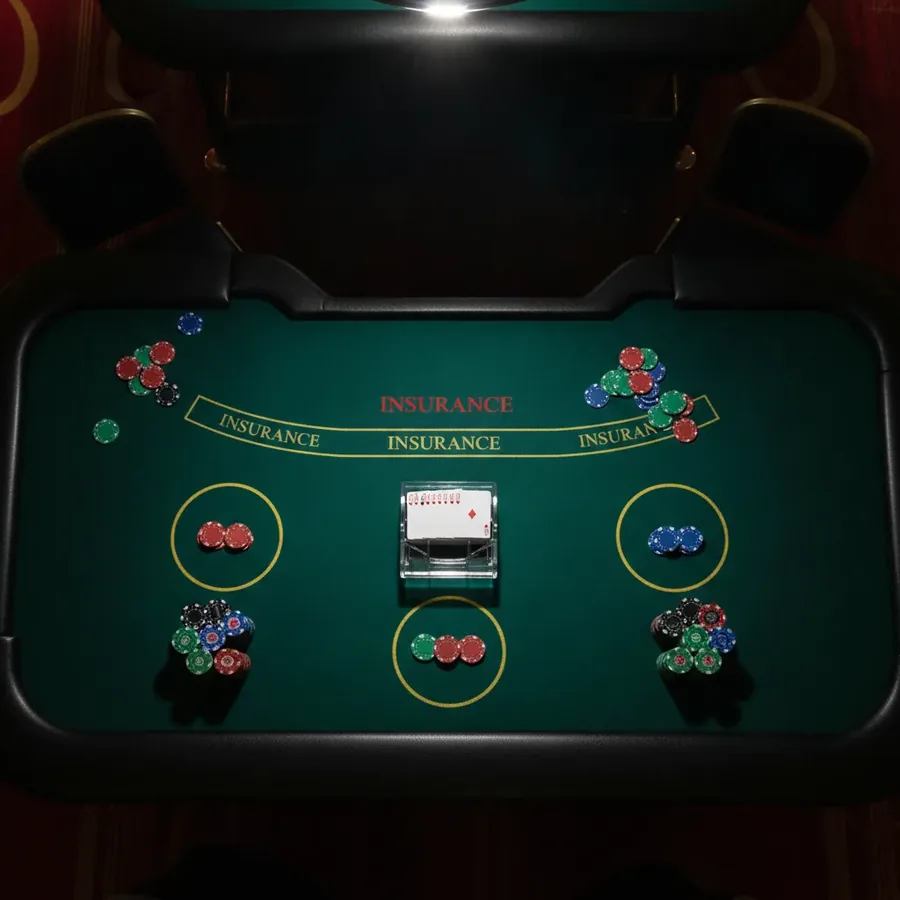
Early Surrender is removed from many tables
Late Surrender allows a player to forfeit half their bet after the dealer checks for blackjack, improving the RTP by approximately 0.08 percentage points compared to no surrender rules. This rule applies to standard variations like the 6-deck game where the dealer stands on soft 17, providing a slight mathematical relief in unfavorable situations. Early Surrender, which permits forfeiture before the dealer check, is significantly more valuable at around 0.6 percentage points but is now extremely rare in live environments. Most current tables only offer the less advantageous late version, reducing the overall player equity slightly.
The Blackjack Party table hosted by Evolution does not list Early Surrender as an available option, restricting players to standard play or Late Surrender if offered. Without the early option, players must wait for the dealer to verify their hand before deciding to exit, losing more time and potentially facing a dealer blackjack. This limitation increases the house edge compared to older games that permitted immediate folding, making the strategic depth somewhat shallower for experienced analysts. The absence of this rule means players cannot mitigate losses as effectively in the initial moments of the hand.
Standard Blackjack 6 Decks with S17 and DAS relies on strict basic strategy to maintain its 99.54% RTP, as Early Surrender is notably absent from these configurations. If Early Surrender were present, the house edge would drop further, but its removal forces reliance on hitting or standing decisions alone. This change impacts the long-term expected return, requiring players to adhere more rigidly to optimal plays without the safety net of early folding. The reduction in strategic options slightly elevates the cost of play for those attempting to minimize variance.
No Double Down on three cards
The standard Blackjack 6 Decks variant allows doubling down on any two cards and even after splitting, known as DAS, which improves the RTP by roughly 0.14 percentage points. However, most live tables restrict doubling to only the first two cards received, prohibiting the action on a third card drawn after a hit. This restriction limits the player's ability to capitalize on strong mid-hand totals, forcing a decision to stand or hit instead of increasing the wager. The exclusion of three-card doubles reduces the potential upside of aggressive playing strategies during a session.
Lightning Blackjack by Evolution offers multipliers up to 25x but typically enforces standard doubling rules that prohibit actions on three or more cards in a single hand. While the base RTP is 99.56%, the inability to double on three cards means players cannot maximize profits when drawing a beneficial third card like an Ace or Ten. This rule aligns with common casino standards but removes a layer of strategic flexibility available in some land-based venues. Players must accept the forced stand or hit, accepting the inherent risk of busting rather than risking more capital.
Infinite Blackjack maintains an RTP of 99.47% with unlimited seats, yet it generally follows the convention of limiting double downs to the initial two-card hand. Allowing doubles on three cards would increase the player's edge, but the restriction keeps the house advantage stable at the published level. This limitation affects the variance of the game, as players cannot aggressively expand their bets when the odds temporarily favor them after a hit. The rule simplifies the gameplay flow but reduces the depth of strategic decision-making for advanced users.
Unlimited seats via a split dealer hand
Infinite Blackjack by Evolution introduces the concept of unlimited seats by splitting the dealer's hand into multiple independent actions, accommodating numerous players simultaneously. This technical innovation allows up to five players to bet against different parts of the dealer's single shoe, each receiving their own distinct set of cards. The RTP remains at 99.47% despite the complex dealing structure, ensuring fairness across all concurrent hands at the virtual table. This setup maximizes throughput and accessibility for players worldwide without compromising the integrity of the game mechanics.
Lightning Blackjack also supports unlimited participants by utilizing a split dealer hand mechanism, allowing many users to join the same table concurrently. Each player interacts with a separate segment of the dealer's cards, while the game applies Lightning Multipliers up to 25x to individual winning hands. The RTP of 99.56% is maintained across this expanded format, demonstrating that the splitting method does not alter the fundamental mathematical expectations of the game. This feature enhances social interaction and competitive density among the diverse player base.
The Blackjack Party table offers a unique atmosphere with two moderators, but it also employs seat management strategies that may involve split dealer interactions to handle traffic. While specific seat counts vary, the underlying technology often mirrors the split-hand approach seen in Infinite variants to ensure smooth gameplay for all attendees. This method prevents bottlenecks and allows continuous action, which is crucial for maintaining the high-energy party vibe described in the game specifications. The technical execution ensures that every participant receives fair treatment regardless of the number of active players.
Seat change at the Live Table in 20 seconds
Switching seats at a live blackjack table typically requires waiting for the current hand to conclude, which can take several minutes depending on the pace of play. However, modern platforms facilitate faster transitions, allowing players to vacate a seat and join another within approximately 20 seconds once the round ends. This efficiency minimizes downtime and enables users to switch between tables like Blackjack Party or Lightning Blackjack rapidly based on their preferences. The quick turnover supports dynamic gaming sessions where players frequently adjust their strategies or bankroll allocation across different games.
The availability of rapid seat changes enhances the user experience at Infinite Blackjack, where unlimited seats mean there is always a spot available upon transition. Players can move from one section of the table to another without significant delay, provided they wait for the current deal to finish. This flexibility is particularly useful for managing bet sizes, as users can shift from high-limit areas to lower-stakes zones quickly. The 20-second window represents a balance between procedural fairness and operational speed, ensuring no unfair advantage is gained during the swap.
Blackjack Party with its two moderators benefits from efficient seat management, allowing newcomers to join the festive environment without disrupting ongoing games. The system processes seat changes swiftly, enabling players to enter or leave the virtual floor in about 20 seconds between rounds. This rapid adjustment capability ensures that the table remains full and active, contributing to the lively atmosphere intended by the provider. Users appreciate the seamless integration of movement mechanics, which complements the engaging presentation style of the show.
Blackjack variants at a glance
| Variant | Payout | House edge | Rule | Bet range |
|---|---|---|---|---|
| Blackjack Insurance / Versicherung (6–8 Decks) | 92.53% | 7.47% | Separate Nebenwette bis 50% der Hauptwette, wenn der Dealer ein Ass hat. Basisstrategie schreibt IMMER Ablehnung vor (außer Karten zählen bei True Count ≥ +3). Bei einem Deck Vorteil ≈ 5.88% | Insurance 2:1 |
| Blackjack Ein Deck, klassische Regeln, 3:2 | 99.85% | 0.15% | Weniger Decks = niedrigerer Vorteil; ein Deck gibt ca. −0.48 Prozentpunkte gegenüber 8 Decks. Oft durch 6:5 Auszahlung kompensiert. | Blackjack 3:2, Gewinn 1:1 |
| Blackjack 6 Decks, S17, DAS, DOA, Auszahlung 3:2, Basisstrategie | 99.54% | 0.46% | Dealer steht auf Soft 17; Verdopplung auf jeder Zweierkarte; Verdopplung nach Split erlaubt; keine Aufgabe. Basisstrategie ist für diesen Wert zwingend | Blackjack 3:2, normaler Gewinn 1:1, Insurance 2:1 |
| Blackjack Liberal Vegas Strip (liberale Regeln, 3:2) | 99.72% | 0.28% | Günstigste Regelkombination: S17 + DAS + Resplit + Late Surrender. Standardabweichung 1,15 | Blackjack 3:2, Gewinn 1:1 |
| Blackjack Surrender (Late Surrender) – Regel-Effekt | n.a. (Regel-Modifikator) | −0.08 Prozentpunkte | Spieler gibt Hand nach Dealer-Blackjack-Prüfung auf, verliert die Hälfte des Einsatzes. Verbessert RTP um ca. 0.08 Prozentpunkte. Early Surrender ist wesentlich wertvoller (bis −0.6 Prozentpunkte), aber extrem selten. | Rückzahlung 50% des Einsatzes |
| Blackjack Auszahlung 6:5 statt 3:2 (6 Decks) | 98.15% | 1.85% | Ersatz von 3:2 durch 6:5 fügt exakt +1.39 Prozentpunkte zum Vorteil des Casinos hinzu – stärker als jede andere Regeländerung. Bei $10 Einsatz zahlt Blackjack $12 statt $15. | Blackjack 6:5, Gewinn 1:1 |
Six Decks to Eight Decks in the Shoe
Infinite Blackjack operates with six decks rather than eight, reducing the house edge by approximately 0.02 percentage points compared to standard eight-deck configurations. This slight mathematical advantage is visible in the base RTP of 99.47 percent for the main game, which remains competitive against other live dealer variants. Players utilizing basic strategy on this table can expect a theoretical return that is marginally higher than games using more cards.
The use of six decks in Infinite Blackjack improves the player's odds slightly compared to eight-deck shoes, where the house edge typically rises due to card composition changes. Evolution designs this specific variant to accommodate unlimited players while maintaining a tight rule set that includes doubling after split and resplitting aces. The statistical benefit of fewer decks is small but measurable, contributing to the overall 99.47 percent return to player rate over millions of hands.
Stand-on-17 Rule and Its Meaning for Players
The Stand-on-17 rule requires dealers to stand on all seventeen totals, including soft seventeen, which lowers the house edge by 0.22 percentage points compared to hitting soft seventeen. In contrast, the Liberal Vegas Strip variant also features a soft seventeen stand rule, contributing to its exceptionally low house edge of 0.28 percent. This rule significantly impacts the long-term expected value for players who follow optimal basic strategy charts accurately across thousands of hands.
RNG draws cards from virtual eight-deck shoe
Random number generator blackjack uses a virtual eight-deck shoe to determine outcomes, establishing a baseline house edge of 0.46 percent when standard rules apply. This configuration allows for doubling on any two cards and doubling after splits, yet still carries a higher edge than single-deck games due to the larger deck penetration. The 99.54 percent return reflects these specific mechanical constraints inherent to multi-deck digital simulations without physical card handling.
Latency under 2 seconds at the live table
Live dealer tables at Weiss Casino process bets and display results with latency typically under two seconds, ensuring real-time interaction between the human croupier and the player interface. Lightning Blackjack supports unlimited players simultaneously, relying on this low-latency infrastructure to broadcast multiplier outcomes instantly to all connected devices during the round. The speed of data transmission directly influences the pace of play, allowing for approximately one hundred hands per hour on average.
Place Side Bet before cards are dealt
Players must place side bets such as Any Pair or 21+3 before the initial deal occurs in Infinite Blackjack, where four distinct side wager options are available. These additional wagers operate independently of the main hand outcome but carry significantly higher house edges, often exceeding seven percent for insurance-like propositions. The betting window closes strictly once the dealer begins dealing cards, enforcing a rigid sequence that prevents post-deal modifications to the stake amounts.
What doesn't count towards turnover at 10 percent?
Table games contribute exactly 10% to the wagering requirement for the 300% welcome bonus up to €2,000 plus 100 free spins. Slots contribute 100%, meaning every €1 bet on a slot reduces the turnover target by €1, while the same bet on Blackjack only reduces it by €0.10. This ratio forces players to make ten times more money through table games than through slots to clear the bonus funds efficiently.
The house edge in standard Blackjack variants like the one with 6:5 payouts (1.85%) further complicates the clearing process compared to high-RTP slots. For instance, the RTP of 99.54% for S17 DAS DOA rules implies a 0.46% house edge, which is lower than most slot averages but still requires significant volume. The low contribution rate combined with the inherent house edge means that playing Blackjack significantly delays the unlocking of withdrawable cash.
Specific live dealer tables such as Lightning Blackjack and Infinite Blackjack fall under this restricted category despite their unique features. Lightning Blackjack offers multipliers up to 25x but maintains a 99.56% RTP, while Infinite Blackjack allows unlimited seats with side bets. Neither game accelerates the bonus clearance because they are classified as table games subject to the 10% contribution rule rather than the full 100% applied to slot machines.
Clicked Too Late: Hand Is Automatically Held
Infinite Blackjack from Evolution provides four side bets including Any Pair, 21+3, Hot 3, and Bust It alongside the main hand. These side bets operate independently of the primary decision but require precise timing within the interface limits. If a player fails to select an action or side bet before the timer expires, the system automatically holds the current hand state without allowing further input.
The betting range for Infinite Blackjack spans from 1 EUR to 5,000 EUR, accommodating both casual players and high rollers. Missing the window to place these specific wagers results in lost potential variance opportunities during the round.
Lightning Blackjack operates with a similar automatic hold mechanism but features multiplier cards that can pay out up to 25x. Its betting limits range from 1 EUR to 2,500 EUR, and it boasts a 99.56% RTP for the core game. The automatic hold feature ensures game flow continuity even if a user hesitates, though it permanently locks the bet amount and strategy choice for that specific deal.
Soft Hand and Hard Hand Practically Distinguished
A soft hand contains an Ace counted as 11 without busting, allowing the dealer to hit Soft 17 (H17) in certain variants. When the dealer hits Soft 17, the house advantage increases by 0.22 percentage points compared to standing on all 17s. This rule change directly impacts the expected return, reducing the RTP from 99.54% to approximately 99.32% in affected games.
Hard hands lack an Ace or contain an Ace forced to count as 1 to avoid exceeding 21, making them less flexible. In the Liberal Vegas Strip variant, which offers favorable rules like Resplit Aces and Double After Split, the house edge drops to just 0.28%. Players must distinguish between soft and hard totals to apply the correct basic strategy adjustments for maximum mathematical efficiency.
Insurance is a separate side bet offered when the dealer shows an Ace, paying 2:1 if the dealer has Blackjack. This bet carries a steep house edge of 7.47% for 6-8 deck games, making it a poor value compared to the main game. Basic strategy dictates always rejecting insurance unless counting cards reveals a true count of +3 or higher, as the statistical expectation is heavily negative.
When can you increase your bet?
Doubling down allows a player to double their initial wager after receiving two cards, typically restricted to specific totals. The Double After Split (DAS) rule improves the player's odds by 0.14 percentage points compared to restrictions on doubling post-split. This rule is available in the S17 DAS DOA variant, contributing to its superior 99.54% RTP.
Splitting pairs creates two independent hands, each requiring an additional bet equal to the original stake. Resplitting Aces is permitted in some liberal variants, improving the RTP by 0.08 percentage points by offering more strategic flexibility. However, splitting is usually limited to creating up to four hands, and Aces are often dealt only one card per split.
Betting limits vary significantly across different live dealer tables, influencing how much a player can increase during a session. Blackjack Party allows bets from 1.00 EUR to 1,000 EUR, while Lightning Blackjack extends the upper limit to 2,500 EUR. Players cannot increase their bet mid-hand; doubling or splitting must occur immediately after the initial deal according to the specific table rules.
Soft 17: Dealer Hits or Stands
When the dealer hits Soft 17, the house edge increases by 0.22 percentage points compared to standing on all 17s. This rule appears in many standard online variants and negatively impacts the overall return to player percentages. Players relying on basic strategy must adjust their decisions slightly to account for the dealer's higher probability of improving weak hands.
The S17 variant offers a better environment for players, maintaining a house edge of 0.46% with a 99.54% RTP. Standing on Soft 17 reduces the dealer's chances of busting, but the stricter rules on doubling and splitting in other areas often compensate. This configuration is common in games like Infinite Blackjack, where the base rules favor the player more than H17 alternatives.
Late Surrender is a rare rule that can reduce the house edge by 0.08 percentage points if available. It allows players to forfeit half their bet after the dealer checks for Blackjack, providing an exit strategy for weak hands. Combining S17 with late surrender and other liberal rules creates the Liberal Vegas Strip variant, which achieves a very low house edge of 0.28%.
Contact
Live - online chat
Banking









Providers












Weiss Casino 2024